

Debt on auto-pilot
Accountability on hold
In the time it takes you to read this sentence, American taxpayers will pay another quarter-million dollars in interest on the national debt.
Over the past 11 years, the federal government has added $21 trillion to that burden—roughly $62,000 for every person in the country. The total now pushes toward $40 trillion. When it crosses that threshold about two months from now, expect the usual ritual in Washington. There will be a flurry of concern, a round of solemn headlines and then a quiet return to business as usual in an atrophied Congress.
Between now and November’s election, voters should demand more than vague promises or recycled talking points. Anyone seeking a seat on Capitol Hill ought to be pressed for specific, concrete steps they will support to confront debt-related issues.
That urgency is only growing. Those elected to six-year terms in the U.S. Senate 95 days from now will be among those who will have to manage a Social Security system whose insolvency date will arrive on their watch.
This is a fiscal reality that can no longer be deferred, disguised or ignored.
Rebranding Greenland
There are reasons Americans hold Congress in such low regard.
Take Congressman Earl “Buddy” Carter (R-Ga.). He introduced legislation that would rename Greenland “Red, White, and Blueland.”
If you’re looking for reassurance, here it is: He filed the bill 17 months ago and it still hasn’t managed to secure a hearing before the House Foreign Affairs Committee.
Linotype to algorithms
I love newspapers—not just for what they contain, but for the craft of assembling them under deadline. Which is why it pains me to admit how long it’s been since I last actually held one.
I miss the ritual of lingering over the pages, tracing the quiet logic that links one story to the next, noticing how editors artfully signal importance not only through words but through placement and headline hierarchy. I miss, too, the coffee shops where most every occupied table held someone bent over the day’s edition.
Even Mary, who once complained about ink migrating to tabletops and my accumulation of unread stacks of papers, recently admitted she misses them, if only as reliable packing material.
I’ve been “all digital” for many months now. And while I greatly admire the creativity The New York Times brings to its digital report, I find myself reading less of any given day’s edition. It’s not the same. It somehow feels like less.
That thought appeared as I read Alex Wright’s delightful new book, Empire of Ink, which traces the central role newspapers played in 19th-century America.
At the end of the Revolutionary War, America had just 37 newspapers. By 1900, it had more than 20,000. Today, of course, the number is far smaller.
Our Founding Fathers understood the wartime power of the press—so much so that “printer’s devils,” or apprentices, were exempted from military service. At the time, colonial America was the most literate place in the world, outside of Scandinavia.
Wright’s new book glorifies journalism’s evolution from the Republic’s earliest days through the unruly mid-1800s and into the industrializing turn of the century, when economies of scale, telecommunications, mechanical typesetting and advertising-driven business models reshaped the industry.
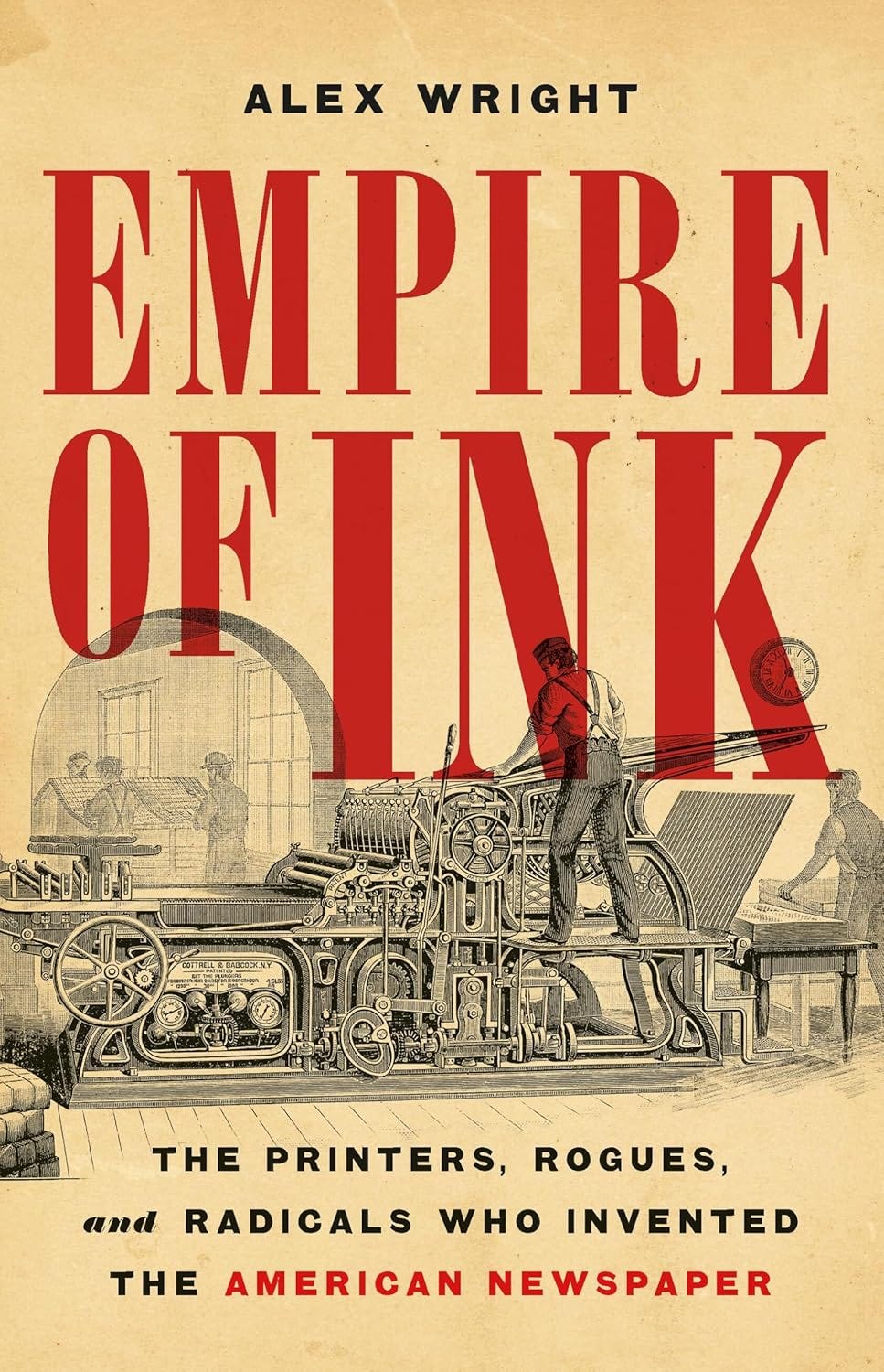
The book is far livelier than that summary suggests. It’s a wonderful collection of stories about how papers became central to American life. Among the details that stayed with me:
Cheap postal rates helped sustain early newspapers. So did loose copyright laws, allowing papers to freely copy one another. (So the cut-and-paste that lives on through internet aggregation isn’t new.)
Stars & Stripes began during the Civil War when Illinois volunteers under Ulysses S. Grant seized a printing press in Missouri and put out a paper. Today its independence from the Pentagon is threatened.
The Civil War transformed journalism as public demand for battlefield news surged; at one point, roughly a third of the world’s newspapers were published in the United States.
Mark Twain might be considered the original “influencer”—until he spent five years and a fortune chasing an automated typesetting machine that failed (it had 18,000 parts!) while a German watchmaker succeeded with his Linotype. Its importance ranks near that of the telegraph and not far behind railroads and electricity.
A Horace Greeley editorial prompted Abraham Lincoln to publicly test the idea of emancipating slaves, using a responsive letter to the editor to gauge public sentiment.
“By century’s end,” Wright writes, “America’s newspapers had transformed from a chaotic patchwork of independently owned papers into a highly capitalized, politically powerful national industry.”
I enjoyed this book in part because it helped me understand how much connective tissue remained between journalism’s earliest days and my own early years in the business, even if the medium now feels, in some essential way, greatly diminished.
In a New Yorker piece seven years ago titled “Does Journalism Have a Future,” Jill Lepore wrote, “Speed displaces accuracy. Emotion displaces thought. And, in the end, anything that slows the reader down, like complexity, gets left behind.”
But Wright suggests technology might eventually lead us away from centralized for-profit publishing to a “more distributed and recombinant media ecology—an echo, however distorted, of the chaotic and pluralistic press culture of the nineteenth century.”
These days, anyone with a phone has a printing press.
Rob home and healing
Thank you to everyone who reached out with kind words and support for our son Rob following his organ transplant six weeks ago at the Mayo Clinic in Jacksonville, Fla.
We’re happy to share that Rob has been discharged and, along with his wife Toni, returned home to Georgia two weeks ago. His doctors are very pleased with his progress—and of course we are, too.
Eureka!
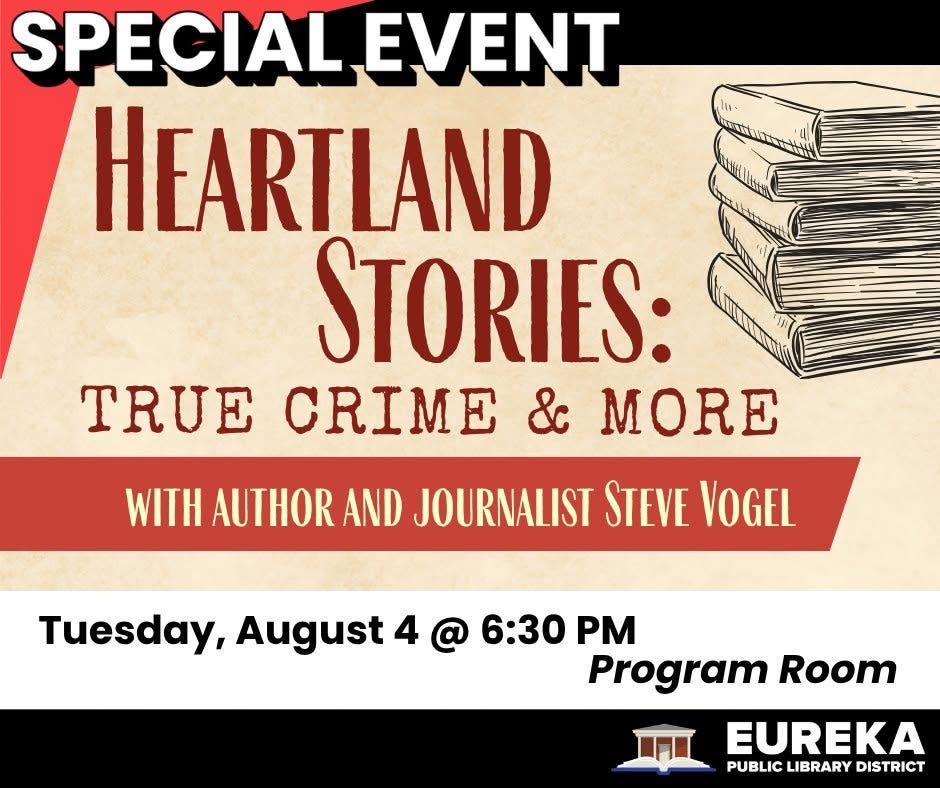
I’ll probably have a couple Woodford County, Ill., stories to tell when I return to my native county seat for a library event next Tuesday, Aug. 4.
It begins at 6:30 p.m. at the Eureka Public Library, just blocks from where Ronald Reagan went to college. Eureka is also the home of retired judge Richard Baner, who presided over both murder trials for David Hendricks, the subject of my Reasonable Doubt.
Unsung but essential
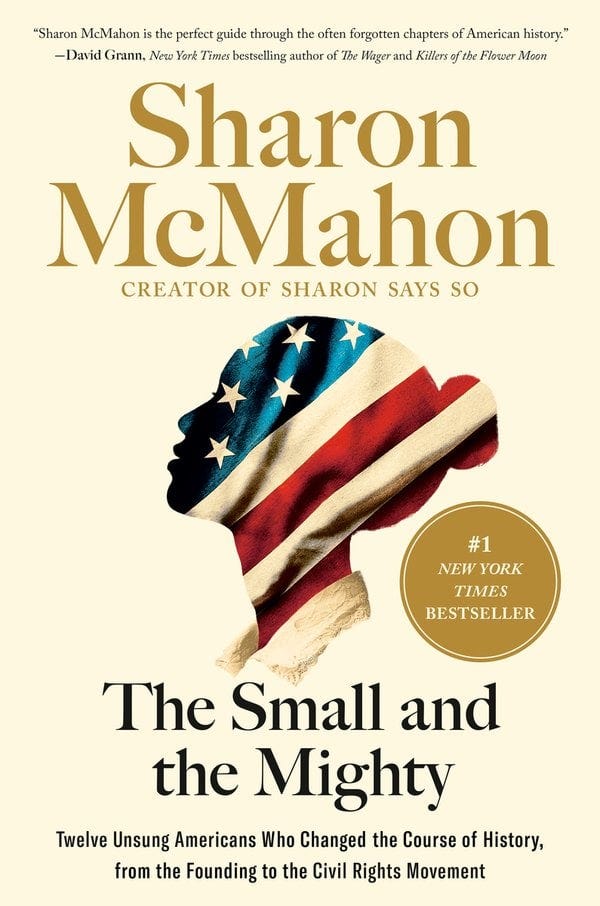
Maybe you’re fully ready to move into August, ready to retreat from July’s full-throated flag-waving. But I suggest there’s still just enough time for you to reflect on what has made America genuinely great by reading Sharon McMahon’s bestselling The Small and the Mighty.
In prose so conversational it feels as though she’s speaking directly to you, McMahon brings to life ordinary Americans often overlooked by history but essential to the nation’s progress, particularly in advancing women’s rights and expanding educational opportunity for minorities.
Consider Julius Rosenwald. His early investment in Sears, Roebuck & Co. made him enormously wealthy. Beginning in 1917, he used that fortune to build schools across the segregated South that ultimately educated more than 600,000 Black children.
McMahon is clear-eyed about the “Rosenfeld school” limitations. They were neither equal nor integrated but, she argues, they were indispensable. Without them, she writes, “integration and equality under the law would not have occurred.” Their alumni include John Lewis, Medgar Evers and Maya Angelou.
She writes about Clara Brown. Once enslaved and separated from her husband and children, Brown gained her freedom and became known as the “Angel of the Rockies” for her generosity to those in need, all the while continuing her search for the family taken from her.
You may recognize the names Daniel Inouye and Norman Mineta, but McMahon uncovers the remarkable stories behind their public lives. She also introduces readers to Katharine Lee Bates, whose lyrics to “America the Beautiful” capture both “our shared history as a nation and the direction in which we should be heading.”
And there’s Rebecca Mitchell, an early advocate for women’s suffrage, whose words resonate with particular clarity today: “Justice is inflexible. It does not lean to the right or the left. Justice and truth are fixed eternal principles.”
There are more reminders that history is shaped not only by the famous and powerful, but by others in quiet and unheralded ways. McMahon shows us how overlooked Americans have proved themselves both small and mighty.
About that speech
I suspect the person most responsible for drafting President Trump’s speech for the rescheduled White House Correspondents’ Dinner last weekend prays that his or her name never becomes public.
I actually feel sorry for that person. What an ordeal. A rambling embarrassment, really.
As usual, Trump wandered way off the prepared text, but this time he really mangled it, dragging it down dark alleys with all his familiar themes. In real time, he backed away from language that acknowledged the press’s role in a free society. He singled out reporters for mockery. He ridiculed old enemies. When he drew occasional laughter, it seemed awkward and uneasy.
At one point, he asked whether anyone understood “this whole freakin’ stupid speech that they wrote.” No one answered.
It was an hour-long stream of disconnected grievances that never quite landed.
Someday there will be a tell-all book about what it was like to write speeches for Trump and then watch him deliver them. You’ll find it in the horror section of your favorite bookstore.
Not woke, more real
About the same time we were watching the final episode of the new TV re-telling of “Little House on the Prairie,” Congressman Tim Burchett was opening a House subcommittee hearing into charges that the Smithsonian Institution has been “infected by a woke ideology,” emphasizing the nation’s flaws and inadequately celebrating its achievements.
“The American story,” the Tennessee Republican declared, “is the birth and growth of a great nation founded on powerful ideals and which we aim to fully achieve. But in the museum’s current telling, history is just an ongoing power struggle between oppressors and the oppressed.”
Then Trump weighed in with an executive order, directing placement of signs and exhibits outside the Smithsonian’s flagship museum criticizing how it portrays America because, he said, museum leadership “cannot be trusted to tell America’s story with honesty and gratitude.”
So I could predict that the fresh TV take on the Laura Ingalls Wilder classic would be scrutinized, screened and studied for whether its covered wagon got stuck in a field of political correctness and culture wars.
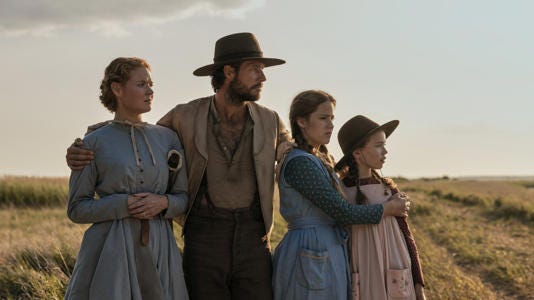
The answer is no—at least when measured against the wildly popular “Little House” series that played on NBC for nine years, beginning in 1974. That show did, in fact, steer away from Wilder’s racist descriptions of Blacks and Native Americans and toward issues involving spousal abuse, addiction and misogyny.
The new series does, too, only with a broader sweep, involving more characters, wider moral choices and a deeper sense of consequence. But that’s not “woke.”
As luck would have it, I happened upon part of an episode of the old series shortly after we watched the new one playing on Netflix. Laura was saving her injured father, with the help of a blind neighbor.
Yes, if the old series tastes of saccharine, the new one is rich with realism, beginning with a harrowing river crossing.
I’m happy to say a second season of the new “Little House” is in production. No signage needed.
Privy to pageantry
I have to work pretty hard to find anything nice to say about the president.
All right, I’ll grant him this: Trump did tighten our southern border, even if he sold the “wall” with a bill of goods that wouldn’t survive a basic fact-check.
And while I bristle at the speed and vanity of his White House renovations (not to mention plans for a triumphal arch), I’m willing to reserve judgment on the life-size statuary new to the Rose Garden. There’s George Washington, Alexander Hamilton, Ben Franklin, and now, Thomas Jefferson.
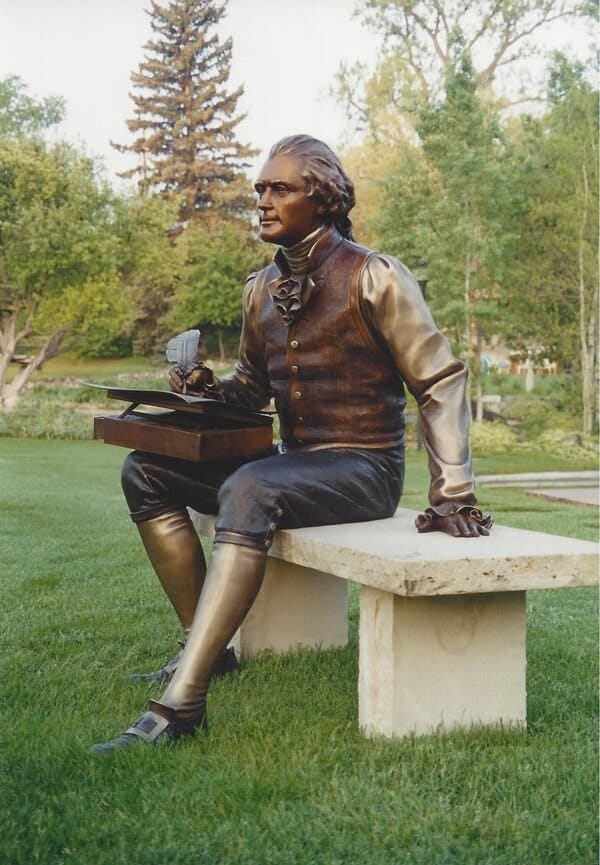
Jefferson, you know, was the first president to reside in the White House, though he mocked it as a Federalist indulgence. “Big enough for two emperors, one pope and the Grand Lama,” he said, as he fretted over a national debt of $83 million. That’s $2.2 billion in today’s dollars, a sum that barely qualifies as loose change in Speaker Johnson’s sofa.
Trump’s renovations are not without precedent. Jefferson made his own improvements.
He replaced an outdoor privy with two indoor water closets. The difference is that Jefferson’s upgrade suggested a concern for human comfort. Trump’s suggest a concern for imperial optics.
Progress, as that Tennessee congressman reminded us, is a matter of interpretation.
Thanks for reading!
I enjoyed reading your digital column this Sunday morning.
Yesterday we volunteered with the St. Jude telethon. Being surrounded by such energy and love is difficulty to put into words. The experience does enhance one's empathy for children and families facing an uncertain future. I pray your son continues his recovery and you and Mary are able to find some peace on this front.
I appreciate your attempt to find something positive to say about President Trump. I can say I supported his notion of bringing back American manufacturing. Unfortunately, his strategy has largely failed. Other positives? Nope. In my view even his securing of the southern border does not justify the means adopted to do so. In fact, I find ICE activities the most disgusting of all of Trumps "measures". The future full exposure of the capture and detention of immigrants in the Trump era will one day join that book you cited from the horror section.
All the best Steve.
Wonderful. You just filled up my reading stack. Great reviews. For how many decades has the national debt just be a hand wringing exercise? The only elected official I appreciated his thoughtful comments on it was our late Senator Simon. I always left a session with him feeling I actually learned something